

One of the biggest mistakes in outdoor design is trying to combine too many styles, colors, and materials at once.
A space can include expensive furniture, beautiful landscaping, and high-end structures — yet still feel visually uncomfortable if everything competes for attention.
The most successful outdoor living spaces usually follow one clear design direction.
That does not mean everything has to perfectly match. In fact, overly “themed” spaces can feel artificial. But strong outdoor design almost always has:
- A consistent mood
- A controlled color palette
- Repeating materials and textures
- A recognizable visual identity
When those elements work together, the space feels intentional, calming, and more luxurious.

Why Consistency Matters in Outdoor Design
Outdoor spaces affect people emotionally more than many realize.
When colors, textures, lighting, and furniture styles conflict with each other, the space can subconsciously feel:
- Busy
- Chaotic
- Smaller than it is
- Less relaxing
On the other hand, cohesive spaces tend to feel:
- More peaceful
- Higher-end
- More spacious
- Easier to spend time in
This is one reason luxury resorts and professionally designed outdoor environments feel so comfortable — they follow a clear visual language throughout the space.
The Importance of Color Palette
A strong color palette creates visual harmony.
The goal is not to use many colors. Usually, the opposite works better.
Most beautiful outdoor living spaces rely on:
- Neutral foundations
- Natural materials
- Soft contrast
- Limited accent colors
Outdoor environments already contain visual stimulation from:
- Plants
- Sky
- Water
- Sunlight
- Seasonal changes
Because of this, overly colorful furniture or décor can quickly feel overwhelming.
A Simple Formula That Works Well
Most professionally designed outdoor spaces follow something close to:
- 70% primary neutral tone
- 20% secondary texture or material
- 10% accent color
For example:
- Warm wood + beige stone + black accents
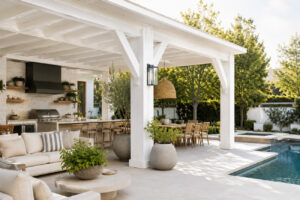
- White structure + sand tones + olive greenery
- Charcoal aluminum + teak + soft linen fabrics
The result feels layered without becoming visually noisy.
Popular Outdoor Design Styles
Here are some of the most popular outdoor décor directions homeowners use today.
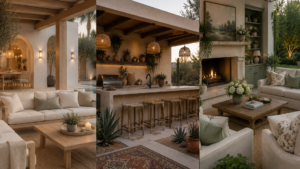
1. Mediterranean Style
Mediterranean outdoor spaces feel warm, relaxed, and timeless.
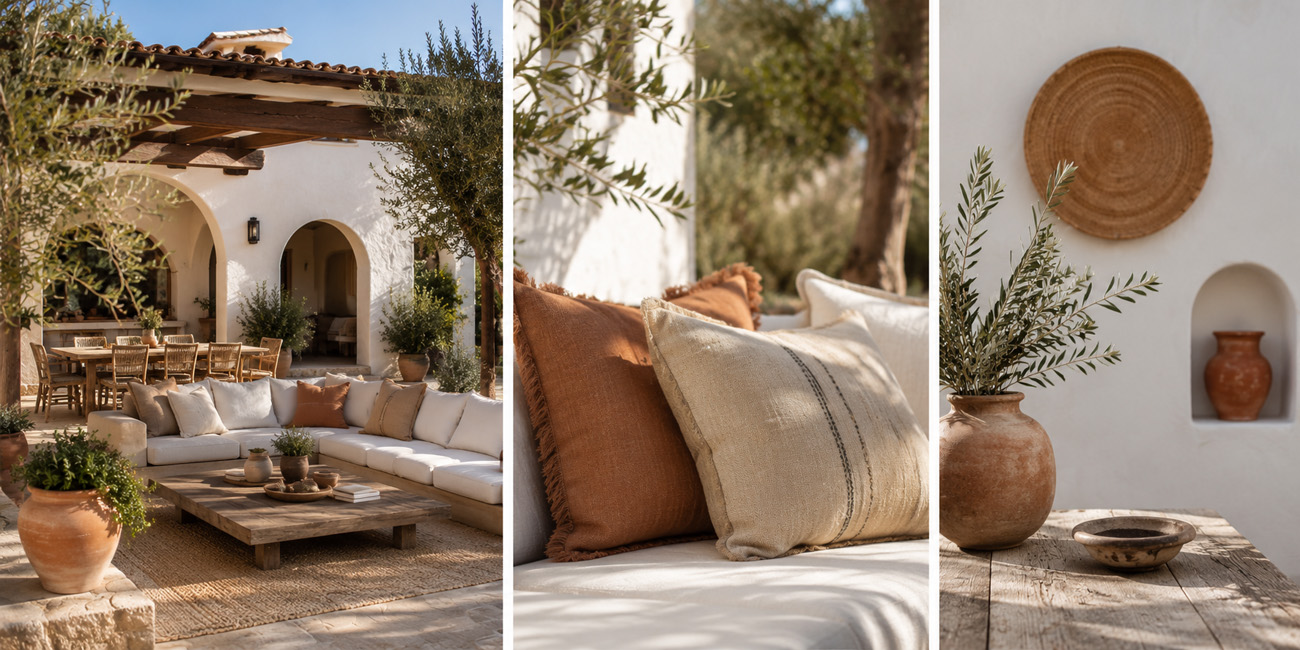
Common Features:
- White stucco
- Warm stone
- Terracotta tones
- Olive trees
- Linen fabrics
- Arched architecture
Color Palette:
- White
- Sand
- Terracotta
- Olive green
- Warm beige
This style works especially well in sunny climates.
2. Moroccan Style
Moroccan-inspired outdoor spaces focus on atmosphere, texture, and rich details.
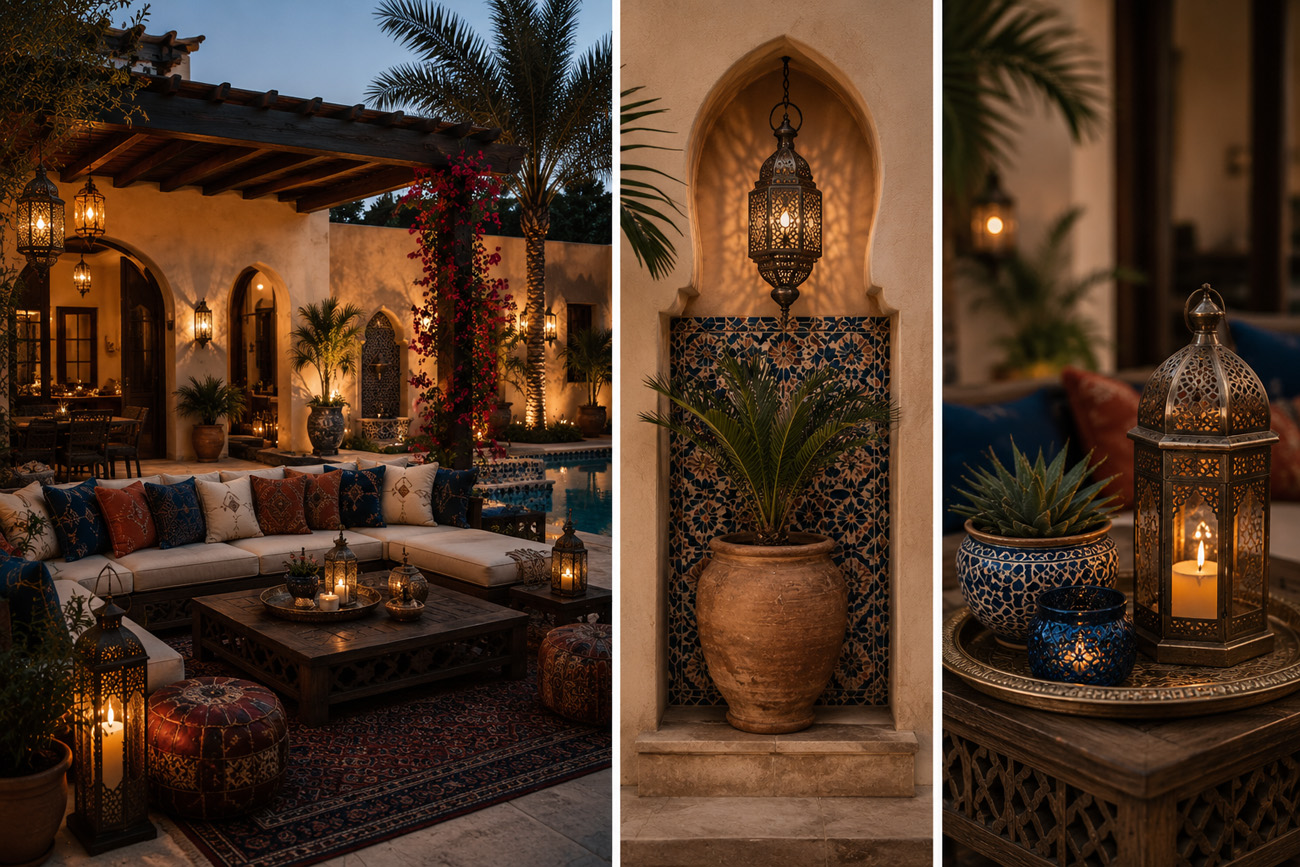
Common Features:
- Lantern lighting
- Mosaic patterns
- Layered textiles
- Dark wood
- Decorative tiles
- Low lounge seating
Color Palette:
- Deep blue
- Burnt orange
- Bronze
- Sand
- Jewel tones
The key is warmth and sensory richness without overcrowding the space.
3. Tropical Style
This style creates a vacation-like feeling at home.
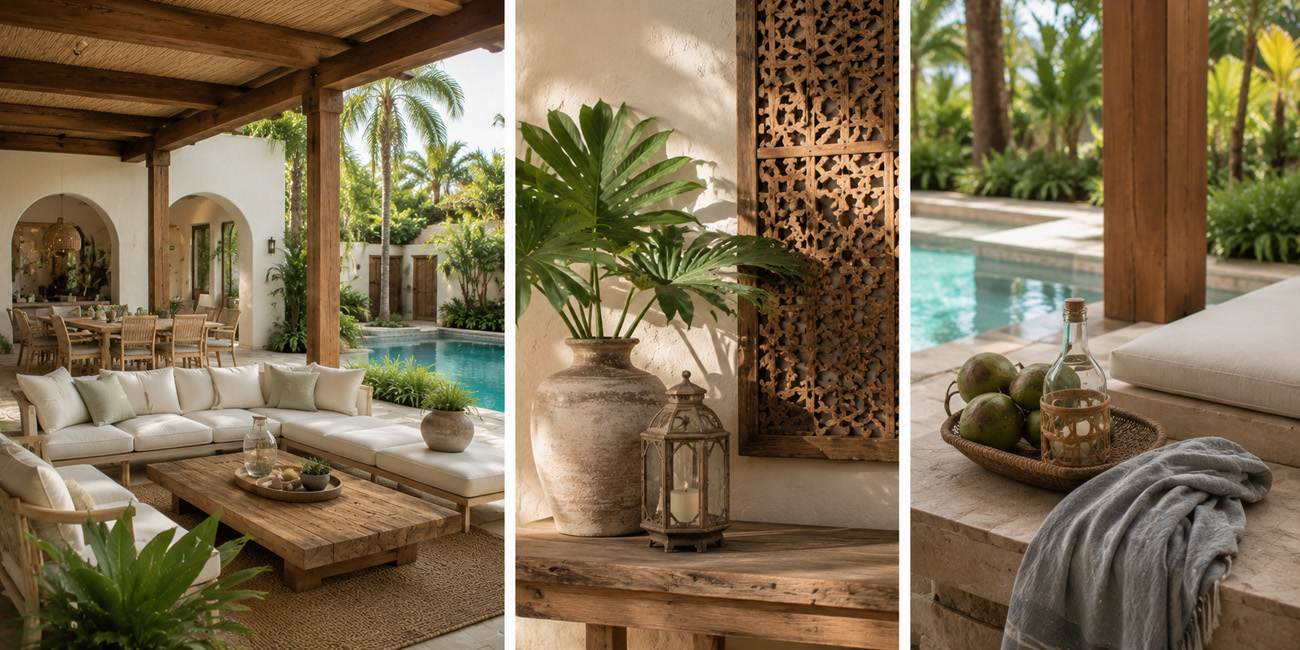
Common Features:
- Palm plants
- Light natural woods
- Pool-focused layouts
- Open airy seating
- Breezy fabrics
- Water features
Color Palette:
- White
- Light oak
- Sage green
- Soft blue
- Natural greenery
The atmosphere should feel relaxed and effortless.
4. Modern Minimalist Style
Minimalist outdoor spaces focus on clean lines and simplicity.
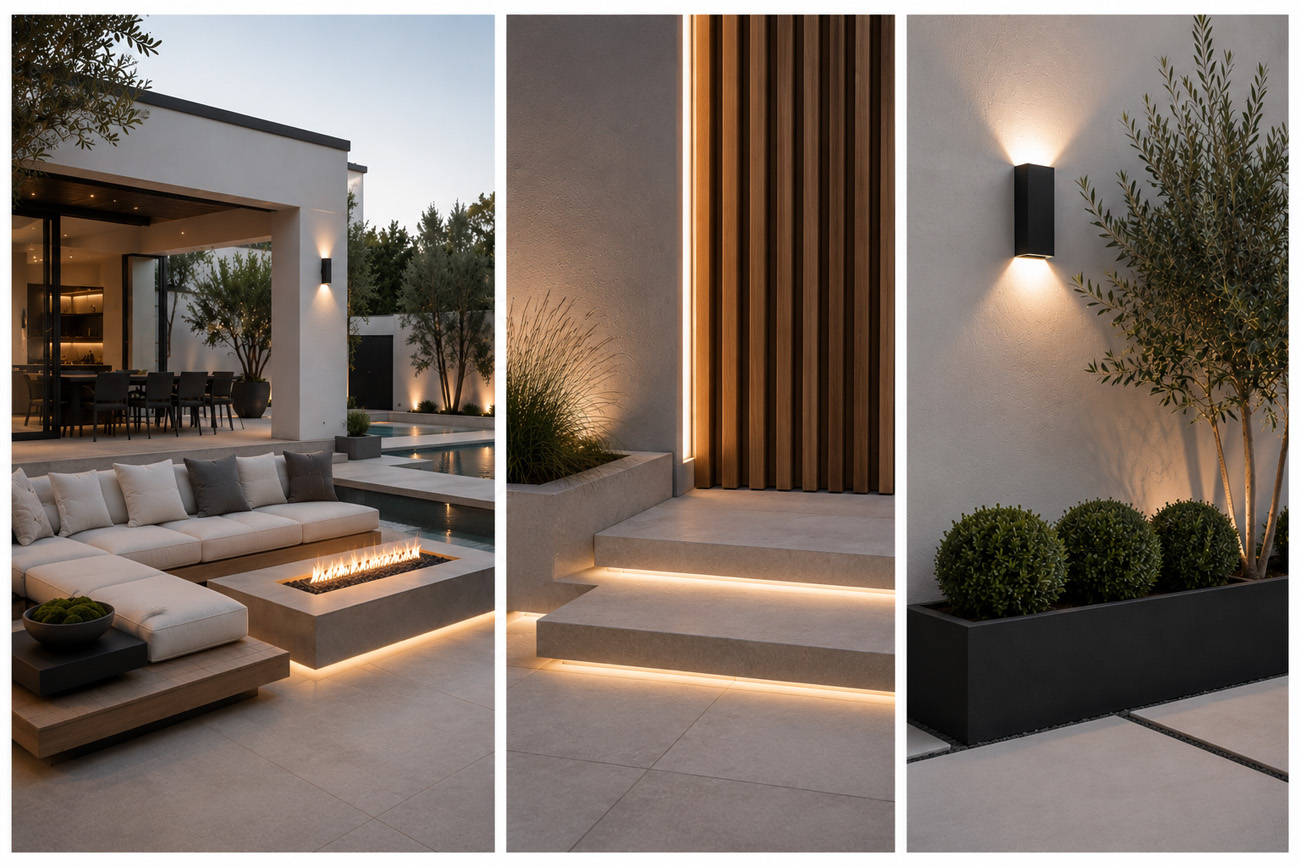
Common Features:
- Large-format pavers
- Hidden lighting
- Neutral furniture
- Structured landscaping
- Simple geometry
Color Palette:
- White
- Charcoal
- Black
- Concrete gray
- Warm wood accents
This style works best when the space feels uncluttered.
5. Scandinavian Outdoor Style
Scandinavian design emphasizes comfort, softness, and natural materials.
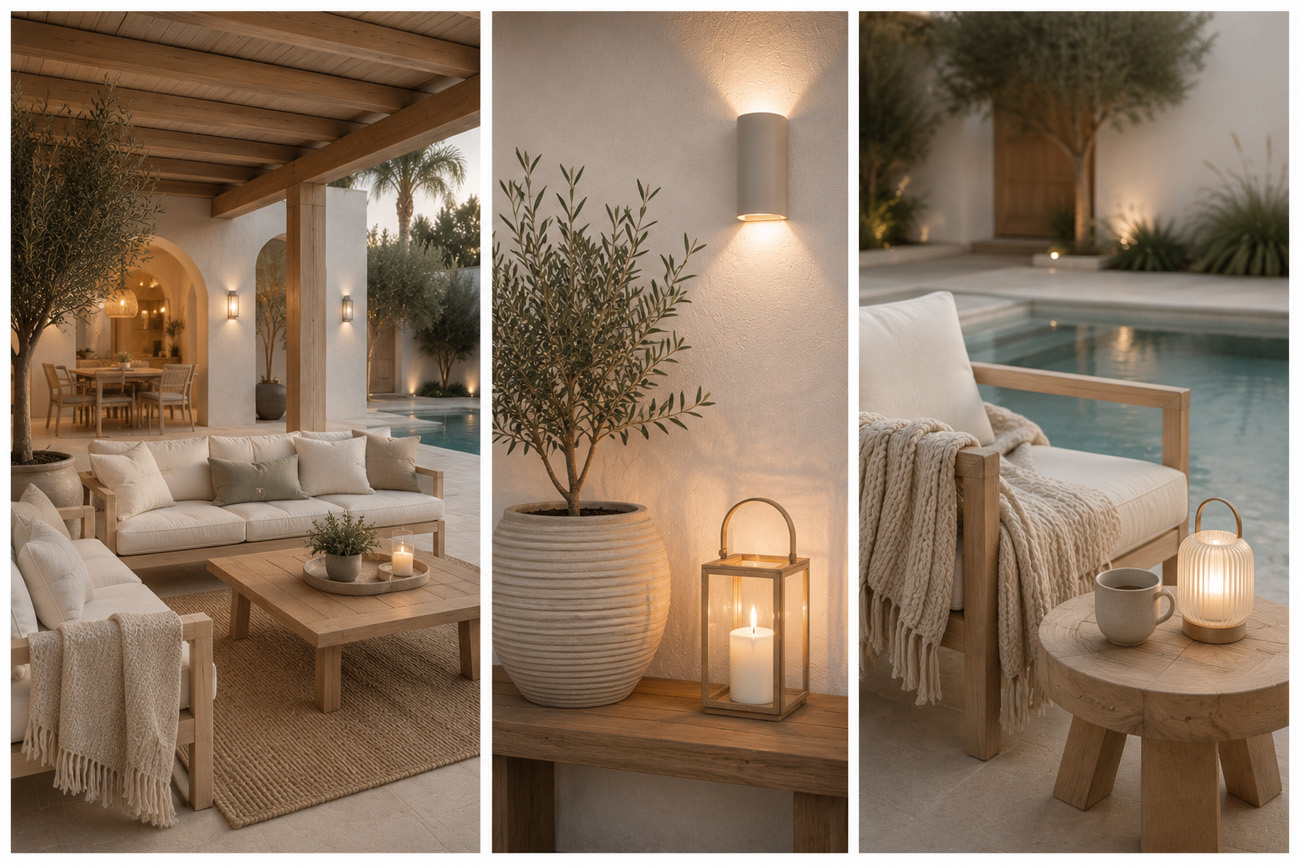
Common Features:
- Light wood
- Cozy textiles
- Minimal décor
- Soft lighting
- Organic textures
Color Palette:
- Light oak
- Cream
- Soft gray
- Warm white
- Muted green
The goal is calmness and comfort rather than luxury or drama.
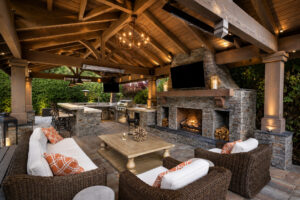
6. Rustic Mountain Lodge Style
This style creates warmth and a strong connection to nature.
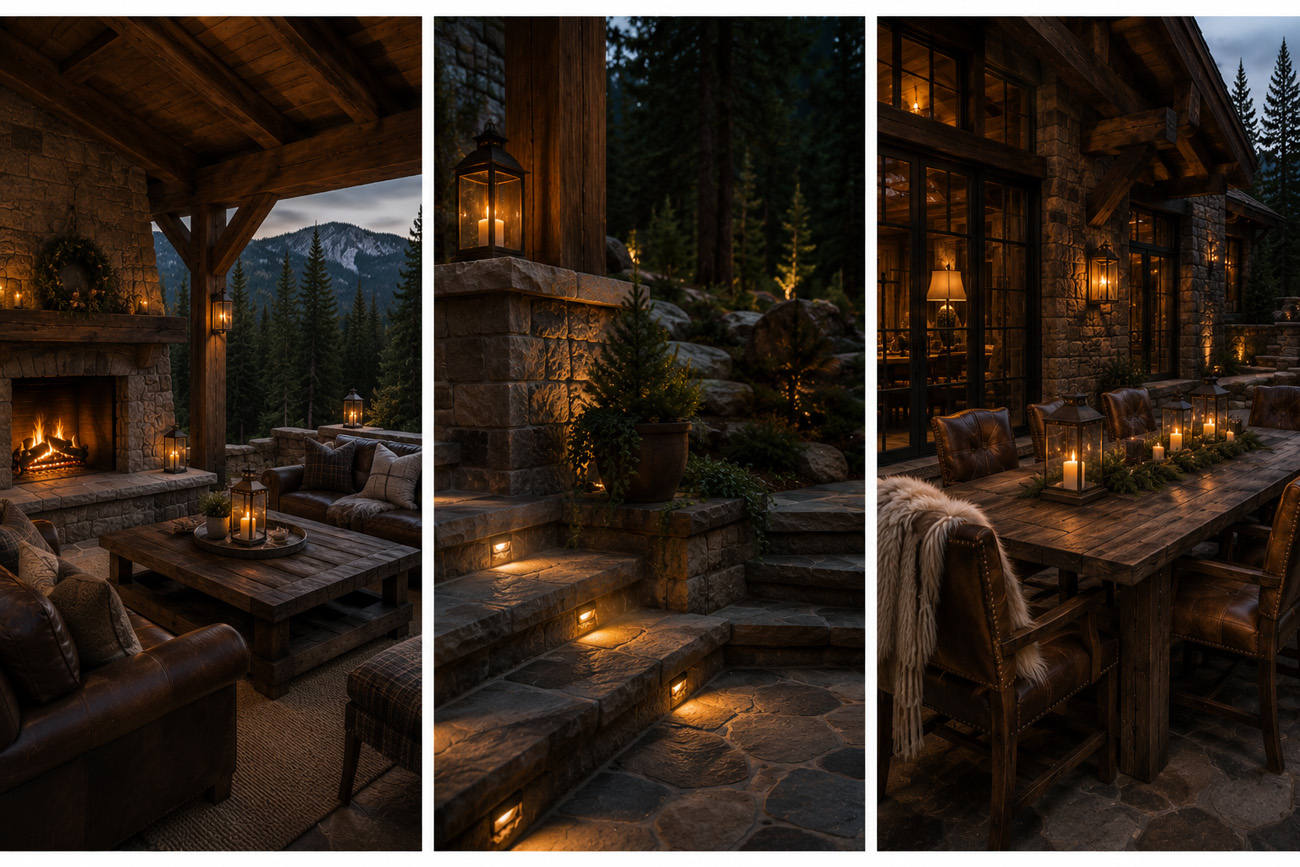
Common Features:
- Heavy timber beams
- Natural stone
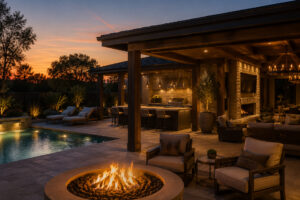
- Fireplaces
- Leather textures
- Dark woods
- Warm lighting
Color Palette:
- Walnut brown
- Charcoal stone
- Forest green
- Warm amber lighting
Perfect for colder climates or heavily wooded properties.
7. Coastal Style
Coastal outdoor spaces feel airy, light, and relaxed.
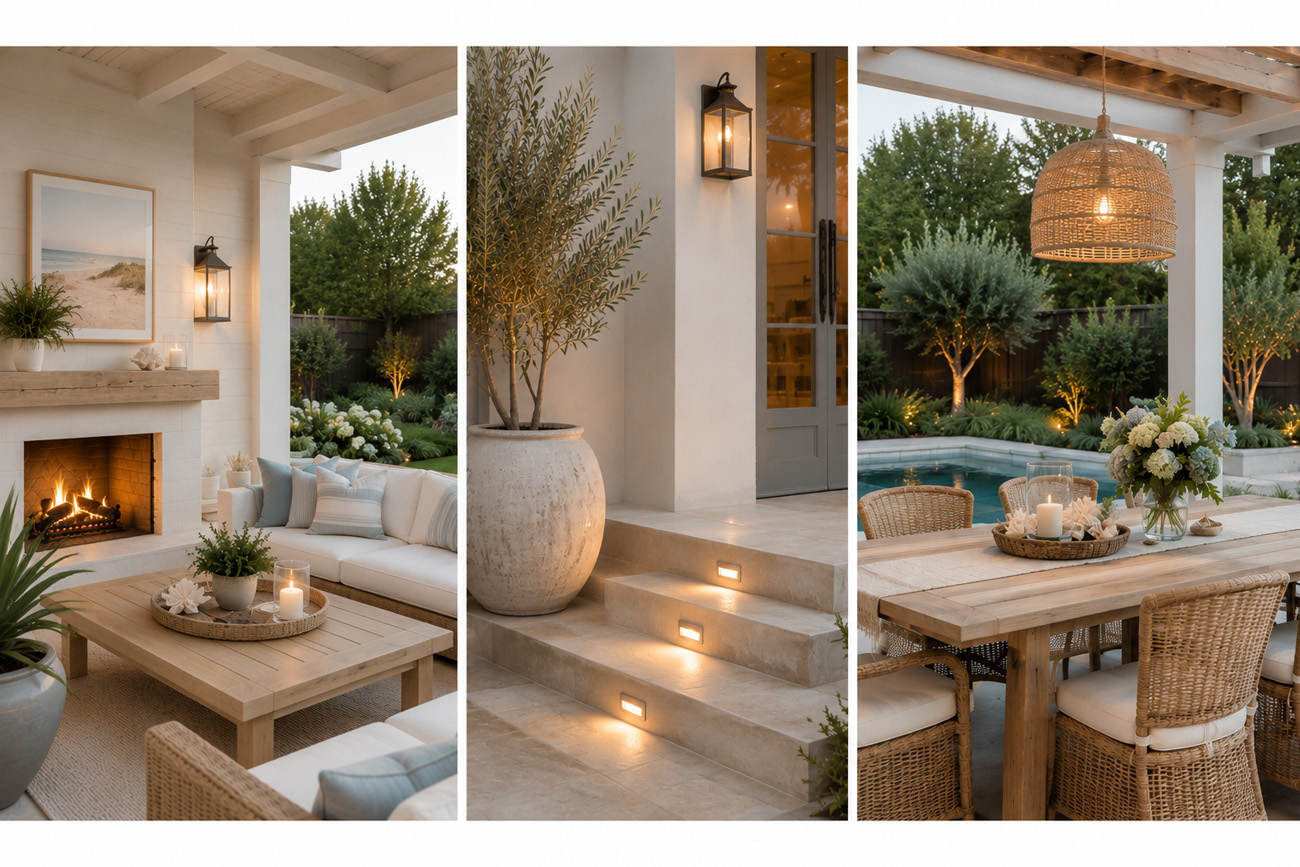
Common Features:
- White structures
- Soft blue accents
- Woven textures
- Slipcovered seating
- Light wood tones
Color Palette:
- White
- Soft blue
- Sandy beige
- Driftwood gray
The best coastal spaces feel elegant rather than overly nautical.
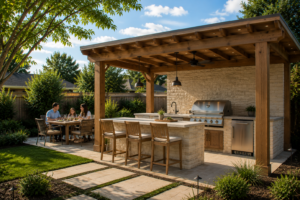
8. Contemporary Luxury Style
This is one of the most popular directions in modern outdoor living.
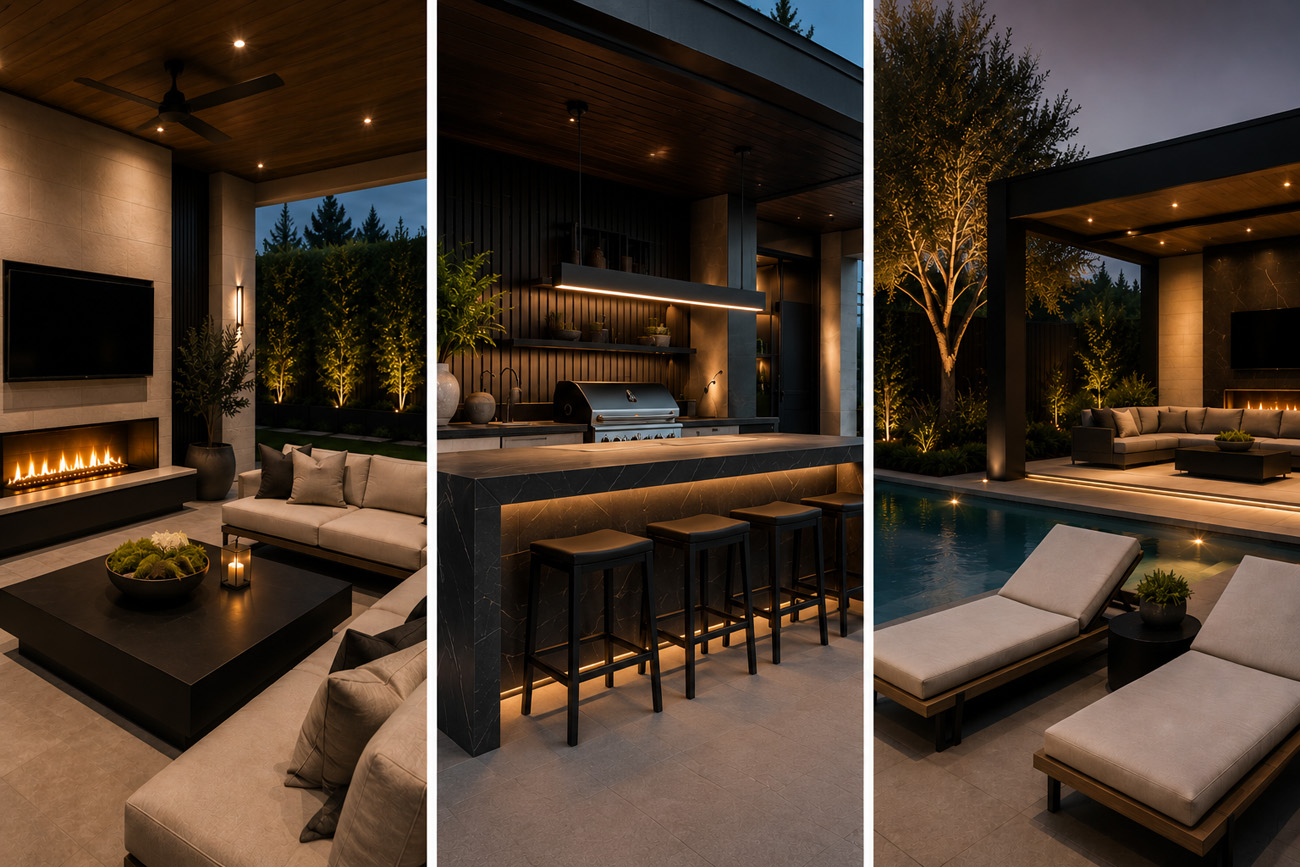
Common Features:
- Integrated lighting
- Large outdoor kitchens
- Black-framed structures
- Porcelain surfaces
- Water and fire features
Color Palette:
- Black
- Taupe
- Warm wood
- Stone gray
- Matte finishes
This style focuses heavily on clean material combinations.
9. Desert Modern Style
Inspired by luxury desert architecture.
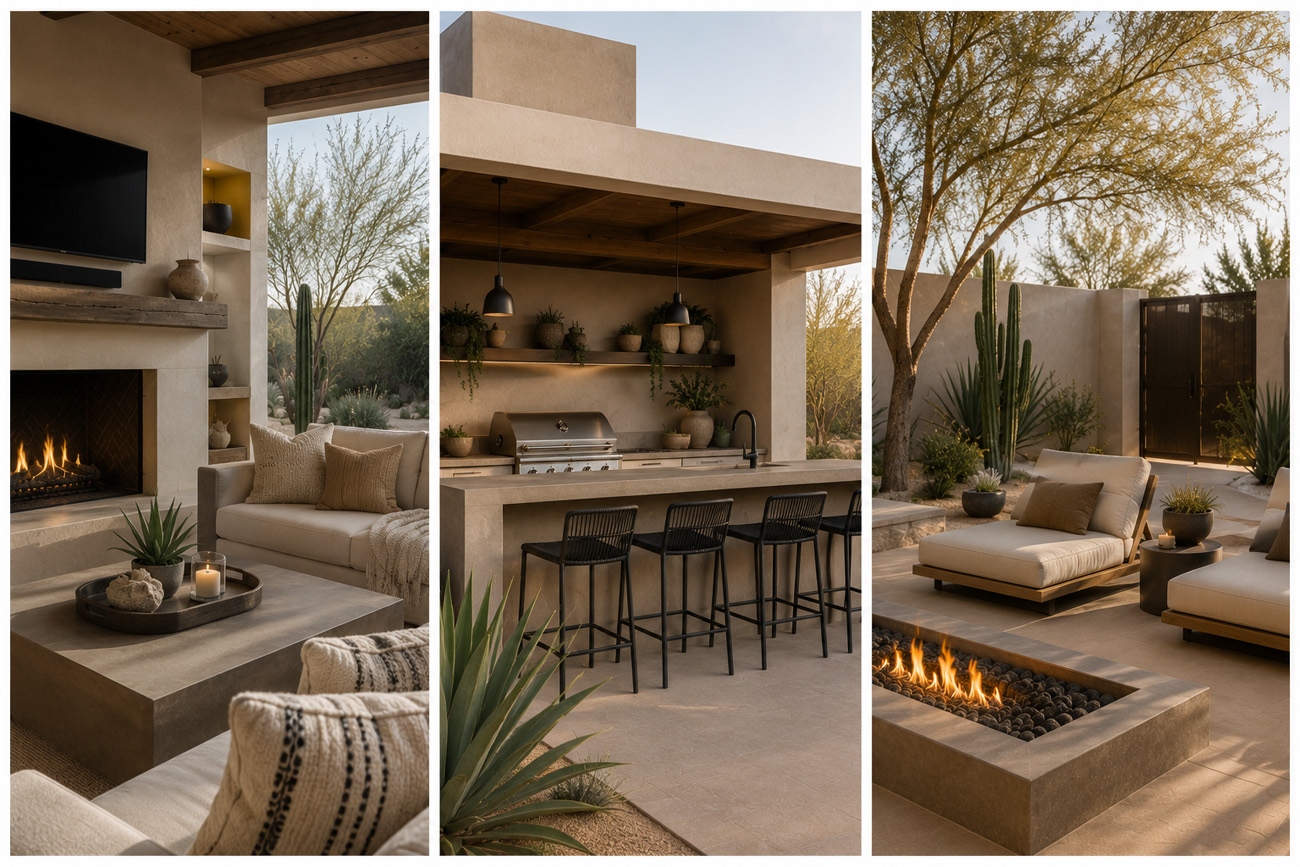
Common Features:
- Cactus landscaping
- Smooth concrete
- Warm wood
- Stone walls
- Minimal planting
Color Palette:
- Clay
- Sand
- Rust
- Warm gray
- Black accents
The focus is warmth, texture, and simplicity.
10. English Garden Style
This style feels romantic, lush, and timeless.
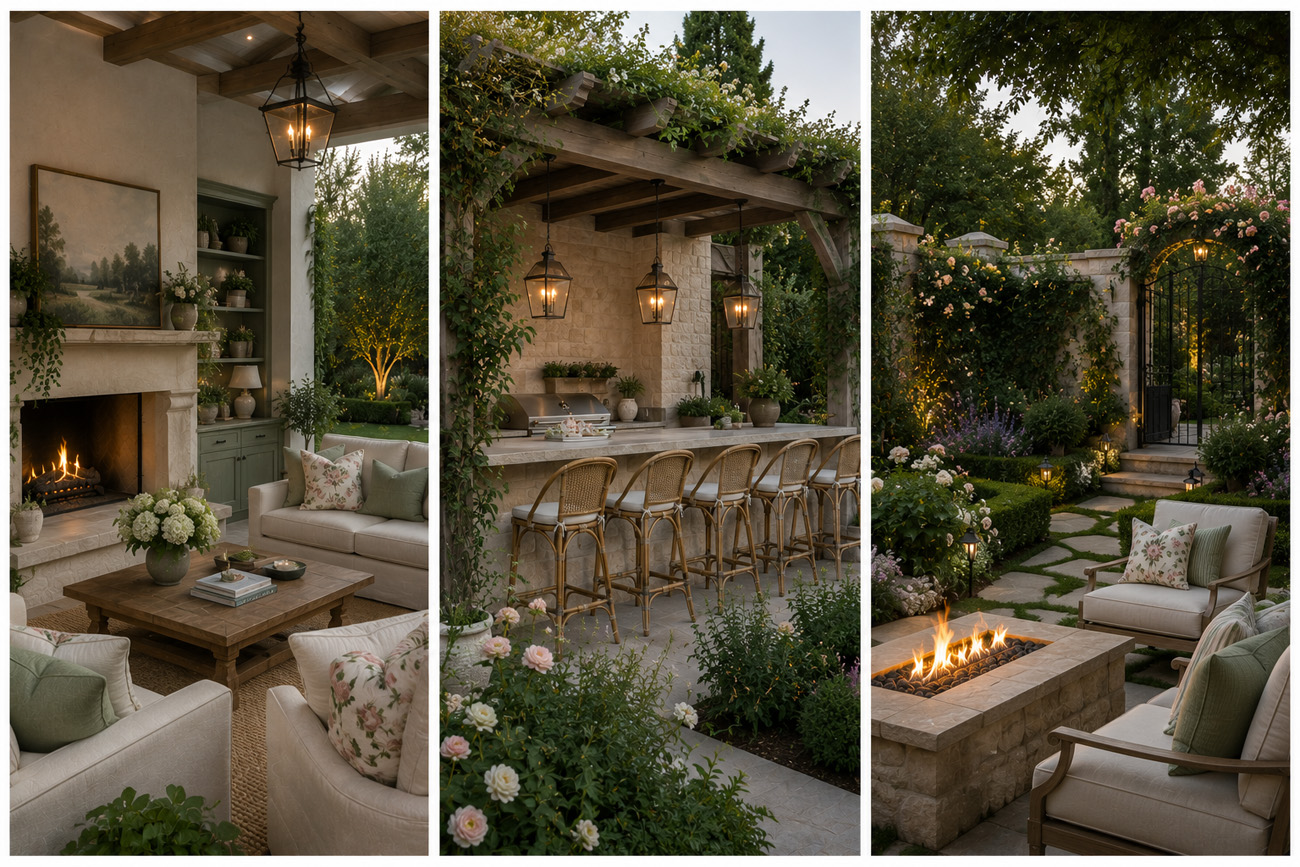
Common Features:
- Abundant greenery
- Climbing plants
- Garden paths
- Vintage-inspired furniture
- Natural stone
Color Palette:
- Sage green
- Cream
- Soft floral tones
- Natural stone colors
The beauty comes from softness and layered planting.
11. Industrial Style
Industrial outdoor spaces focus on raw materials, clean structure, and a modern urban feel.
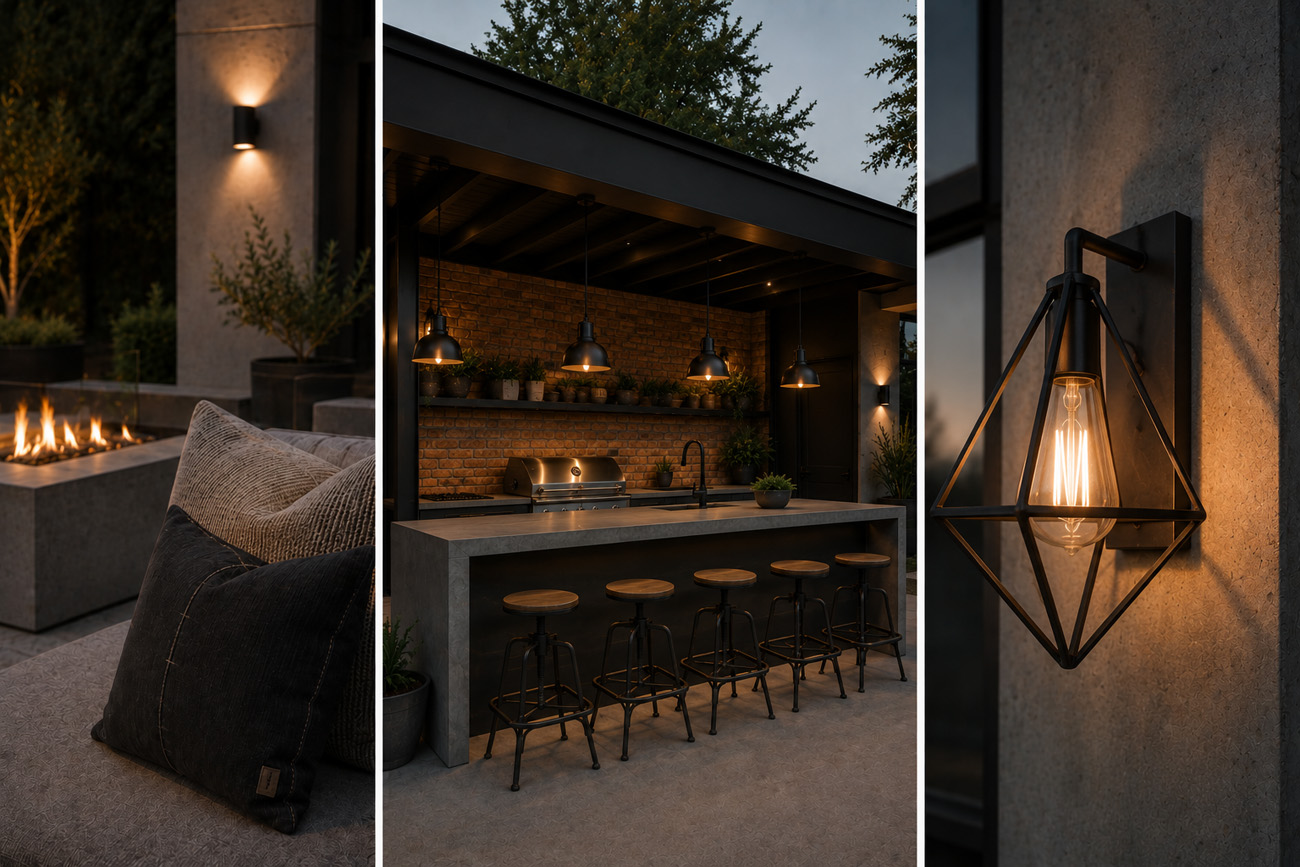
This style works especially well with:
- Black metal structures
- Concrete surfaces
- Exposed steel details
- Dark wood
- Minimal landscaping
- Architectural lighting
Industrial design tends to feel bold, structured, and slightly masculine while still remaining elegant when balanced correctly.
Common Features:
- Matte black aluminum pergolas
- Concrete or porcelain pavers
- Exposed metal hardware
- Linear fire features
- Edison lighting
- Stainless steel outdoor kitchens
Color Palette:
- Charcoal
- Blackn
- Concrete gray
- Dark walnut
- Warm amber lighting
12. Bohemian Style
Bohemian outdoor spaces feel relaxed, artistic, layered, and personal.
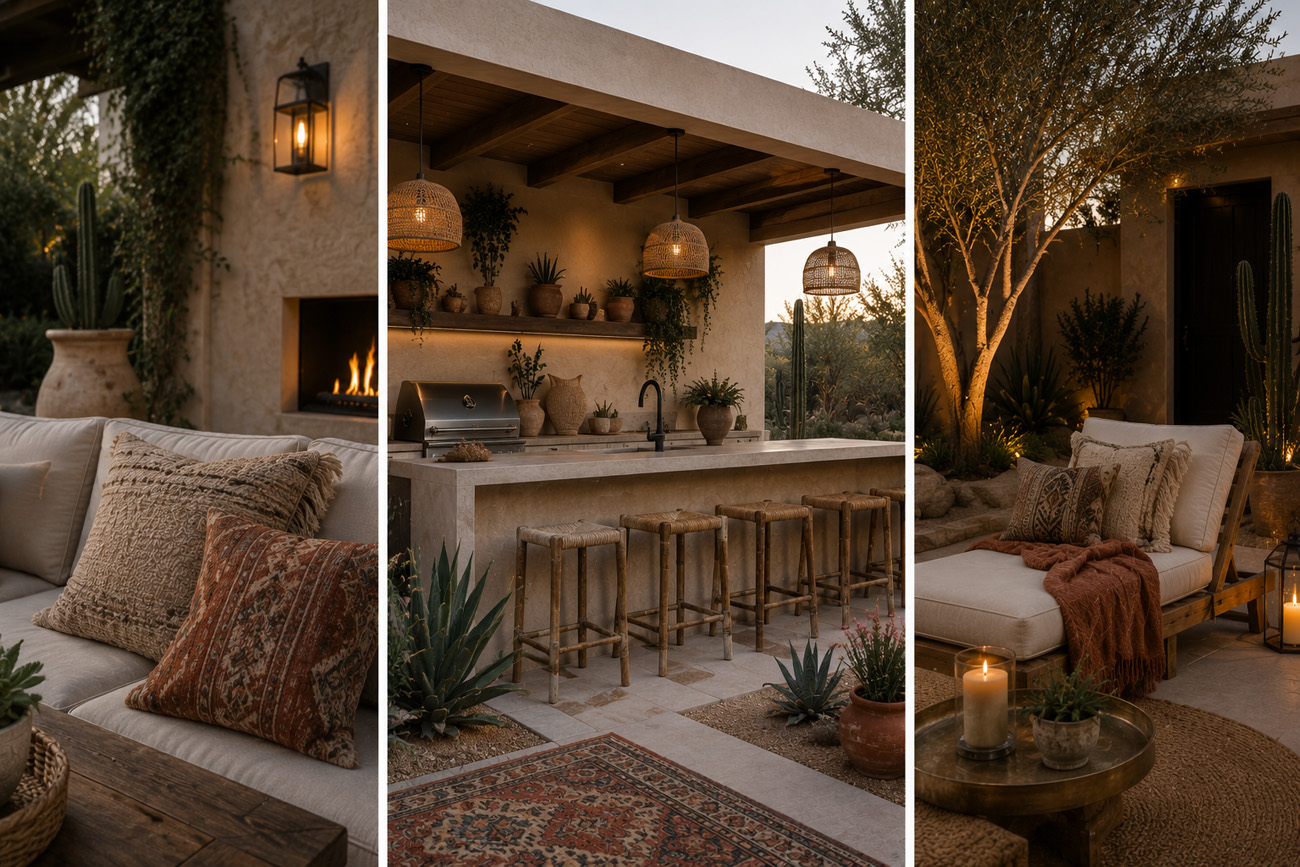
Unlike minimalist styles, bohemian design embraces texture, softness, and collected elements that create a lived-in atmosphere.
The goal is comfort and character rather than perfection.
Common Features:
- Layered textiles
- Outdoor rugs
- Hanging lanterns
- Woven furniture
- Mixed patterns
- Floor cushions and poufs
- Natural wood and rattan
- Plants and greenery everywhere
Color Palette:
- Sand
- Cream
- Terracotta
- Olive green
- Rust
- Muted earthy tones
Bohemian spaces work best when they feel organic rather than heavily styled.
This style is especially effective for creating cozy lounge-focused outdoor environments designed for long evenings, conversation, and relaxation.
How to Choose the Right Style
The best outdoor design style is usually the one that:
- Matches the home architecture
- Fits the surrounding landscape
- Reflects how the space will actually be used
- Feels natural to the homeowner
Trying to force a trendy style onto the wrong property often feels disconnected.
A modern minimalist pavilion may look stunning in one backyard and completely out of place in another.
The Most Important Rule
A beautiful outdoor space does not need dozens of statement pieces.
Usually, the strongest designs are built around:
- A few consistent materials
- Controlled colors
- Comfortable furniture
- Good lighting
- Repetition and balance
When everything works together visually, the space automatically feels calmer, more refined, and more inviting.
That sense of harmony is what makes outdoor spaces feel truly memorable.